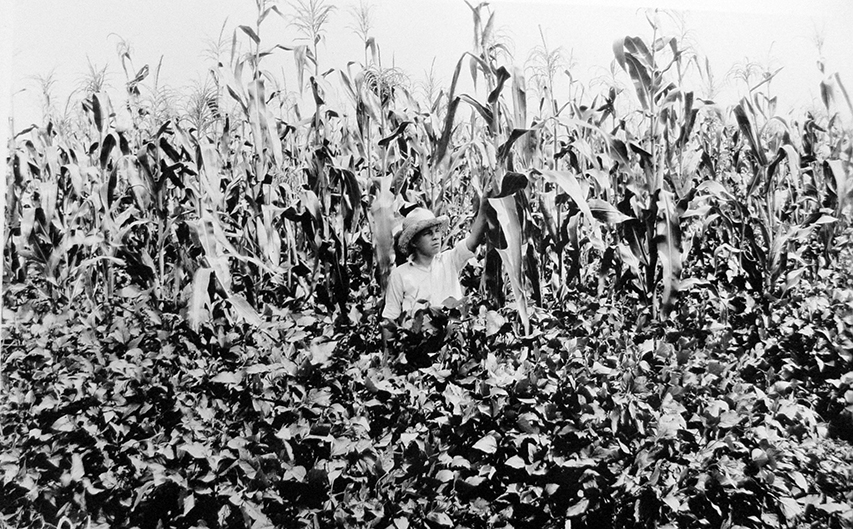
During World War 1, there was a heavy emphasis throughout the nation on food crops, and greater production of wheat and corn was urged. As a result, in 1920, a corn breeding program was initiated at the Station, fertilizer studies were continued on oats. Forage crop research included alfalfa, clover, and vetch, and horticultural work on peaches, plums, grapes, and garden crops was begun.
The decade of the 1920s brought continued research on corn cultivation and the rate of seeding oats. In a published report, the recommendation that cowpeas or soybeans should be inter-planted with corn was stated as follows: “No corn should ever be planted in the Delta without having soybeans in it. It is a hard thing to say, but soil fertility has now become the big problem in the Delta, and the soybean is the best and most practical soil builder in sight. Corn production reached an all-time record high in 1921 when 3,237,000 acres of corn were harvested in Mississippi. Corn, at the time, was solely raised for animal feed, predominantly for mules.
-100 Years of Agricultural Research, The Delta Branch Experiment Station (2004)