An additional 2,580 acres of land were donated to the Delta Branch Experiment Station in 1936 and were designated for reforestation projects. That same year, an inventory list of the station property included: one fireproof office, a laboratory building, nine residences for scientific personnel, 32 residences for skilled and unskilled labor, one large barn, a cotton gin and cotton storage building, a granary, shops, tool sheds, garages, poultry houses, meat curing and cold storage building, gas and water distribution systems, and a fire protection system, at a total value of $194,799. At that time, the Delta Station housed 150 people and 37 mules, cattle, and several horses. The federal property at the Station included the U.S. Cotton Ginning Laboratory, the new Cotton Field Station building, and six residences.
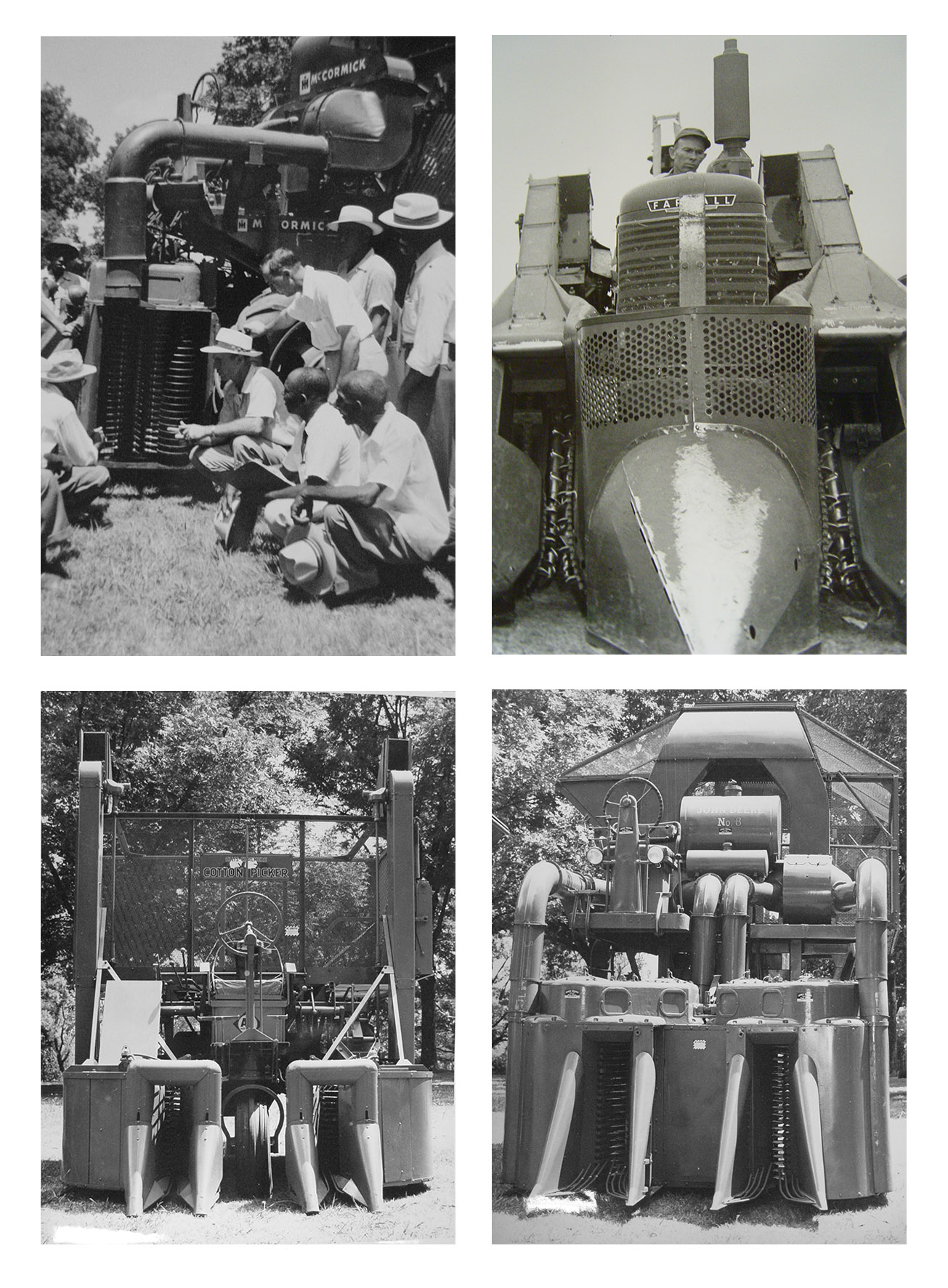
Homer C. McNamara was the Superintendent in 1937. During his tenure, the trend toward mechanization continued. He implemented the first studies of mechanized cotton harvesting with The Rust Brothers and International Harvester cotton pickers. Because of the green stain left on the cotton fiber and excessive trash in cotton, mechanical harvesting was not successful. These problems led to research on strengthening cotton fibers to withstand mechanical harvesting, and research on defoliation, which was a revolutionary new concept of removing the green leaves of the cotton plant.
-100 Years of Agricultural Research, The Delta Branch Experiment Station (2004)